OLSS-Heritage-slide08-1280x590.jpg

Stained-glass windows

There are 10 visible fully stained-glass windows in the church, with other windows having plain glass and stained designs just in the top tracery. 

The larger windows behind the main altar and in the Blessed Sacrament Chapel have three-to-five panels, all depicting scenes from the scriptures. As the church is not built on traditional liturgical lines, the main east window faces west and the entrance door that should traditionally be a west door, is in the east. 

Beginning to the left as you enter the church, windows will be described going clockwise and returning back to the entrance. Take a closer look at the windows yourself when you are in church, as not all are pictured here.

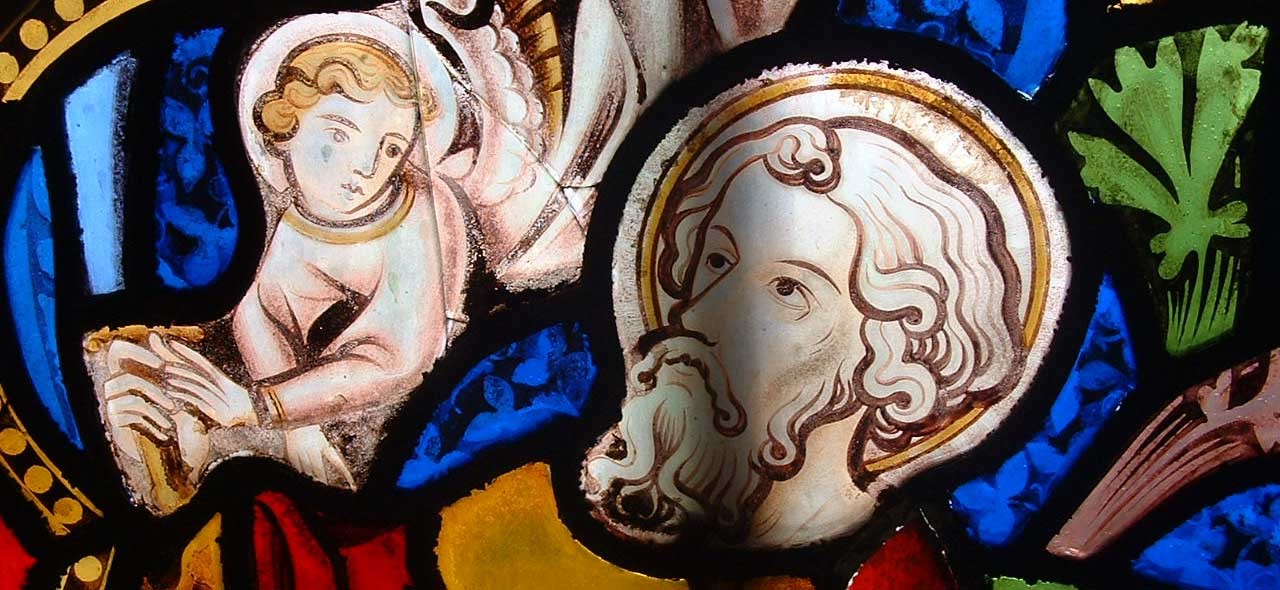
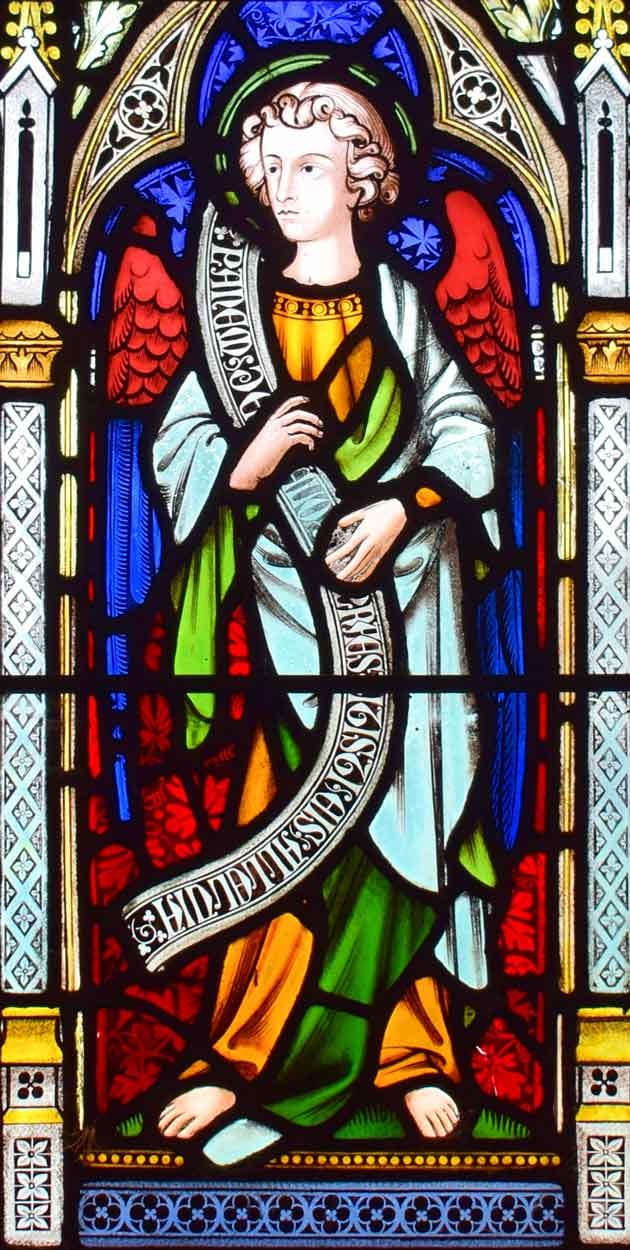
The detail above is from the window in the Blessed Sacrament chapel. It is the sacrifice of Isaac and the angel is trying to hold back the knife from Abraham. 

The baptism of Christ in the Baptistery

Baptistery windows

The west window (straight in front) depicts the Baptism of Christ and was installed in the memory of William Keliher (died 1924). William Keliher was the founder of The Keliher Scholarship at University College Cork, Ireland.  

The north window (on the right), which depicts The Risen Christ appearing to the Apostles, was installed in the memory of Charles Bingham (died 1929).  

Aisle windows

As thanksgiving for the end of the Second World War, further stained-glass windows by designer John Trinick were installed in the 1940s. They are the two furthest windows in the north aisle.

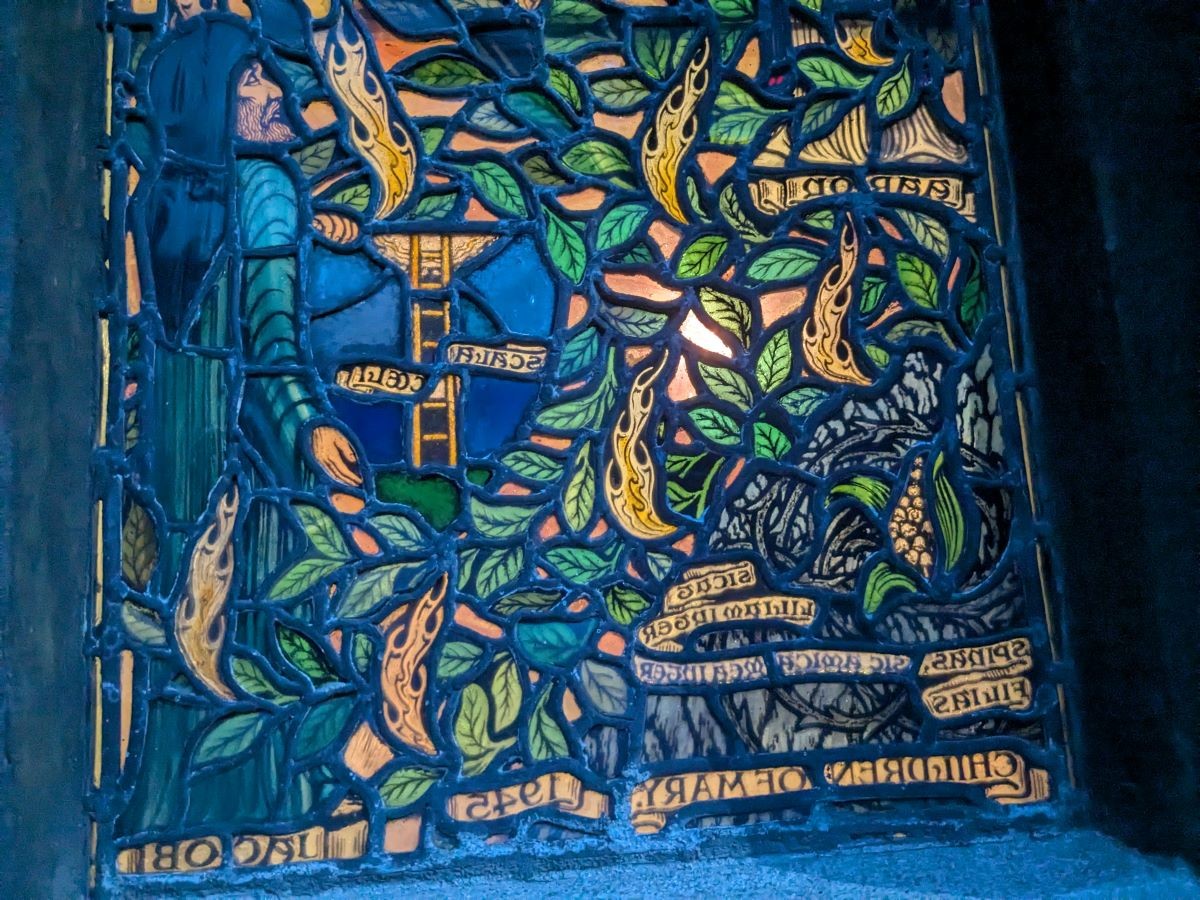
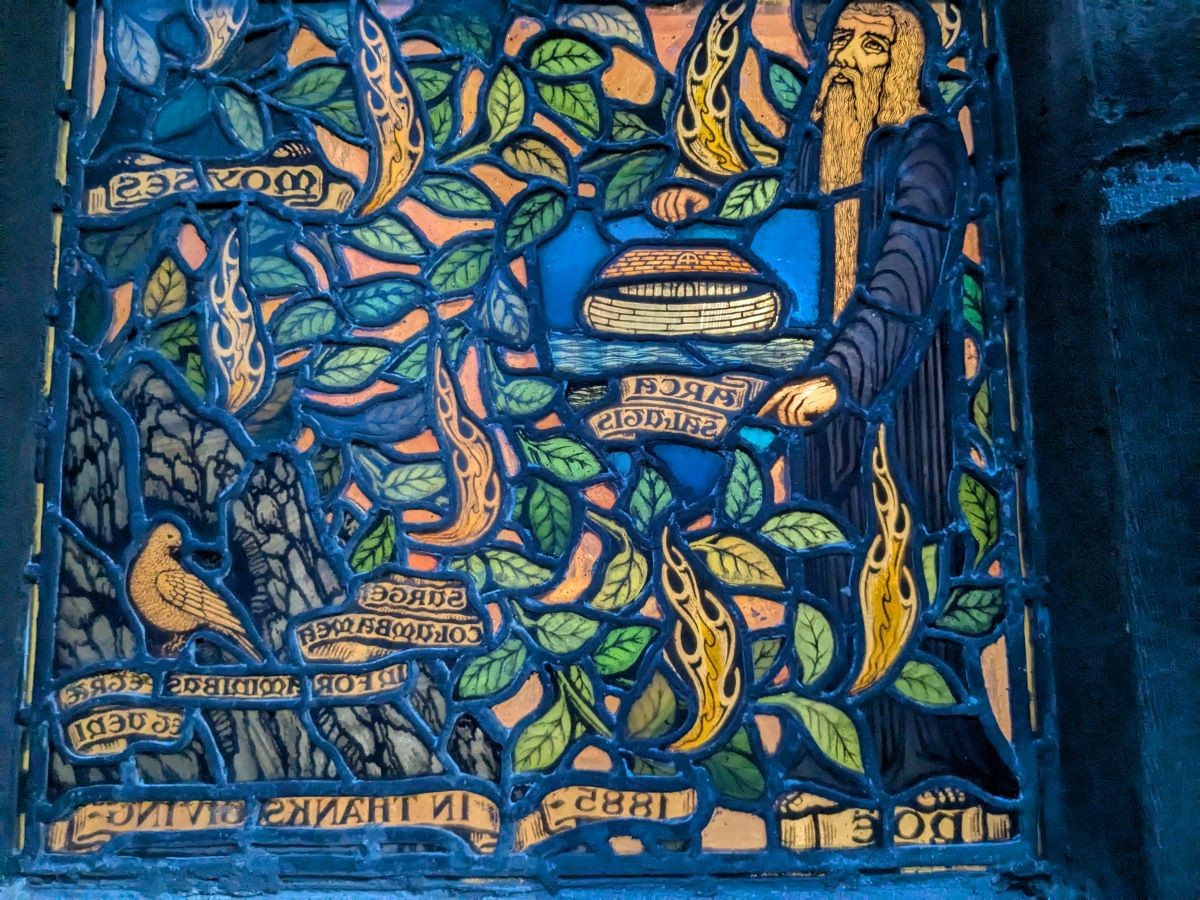
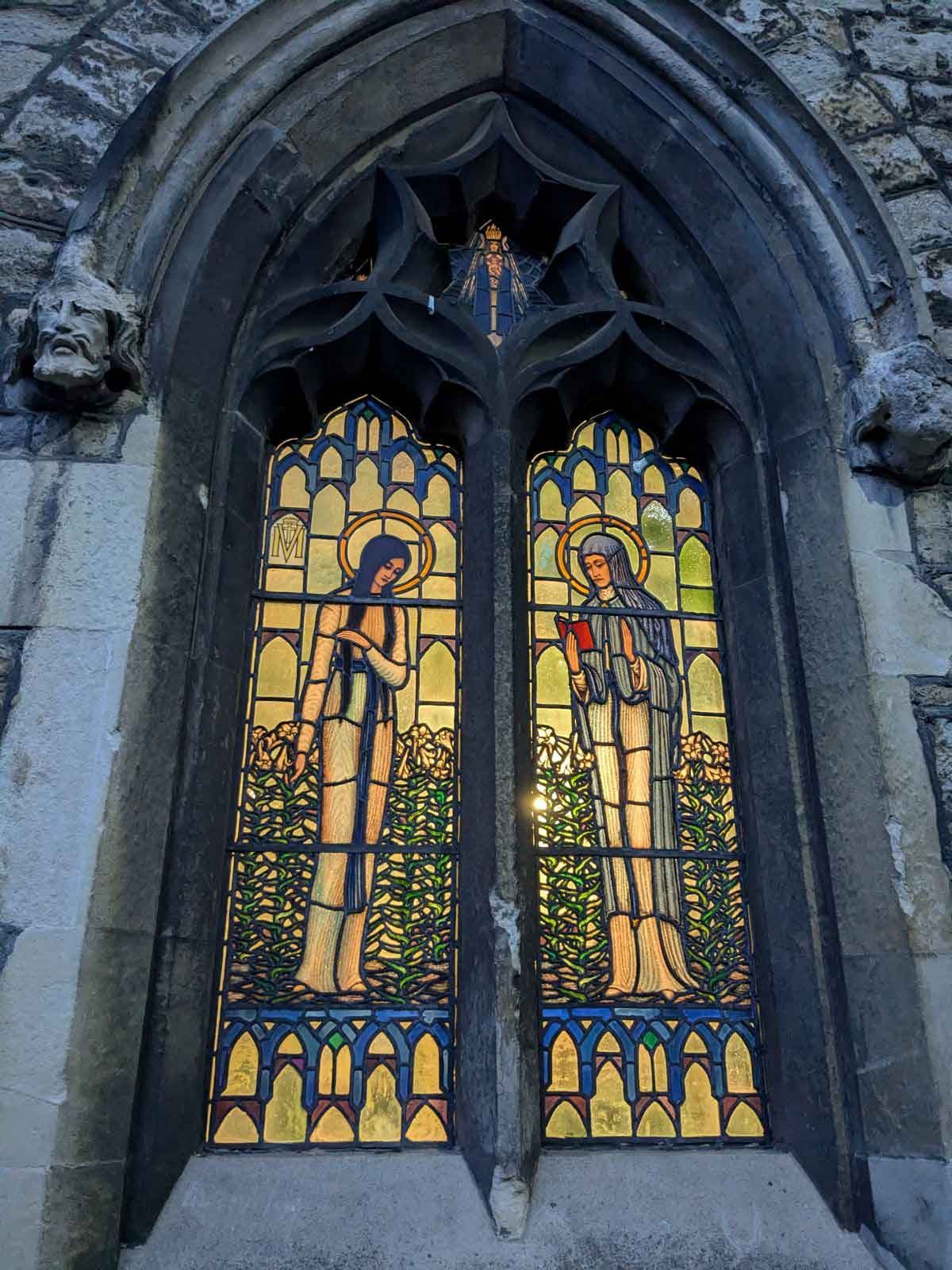
The window of the Virgin and her mother St Anne faces the school, which was called St Anne’s Primary at that time, and the Tree of Jesse is dated 1945.  

A Jesse window is a type of stained glass particularly from the medieval period. It depicts the genealogy of Christ, tracing his lineage back to Jesse, the father of King David, as described in the Book of Isaiah. This window goes back further to ancient patriarchs such as Noah and Jacob. 

Left lower detail of the Jesse tree window looking in from outside the window
Right lower detail of the Jesse tree window looking in from outside the window
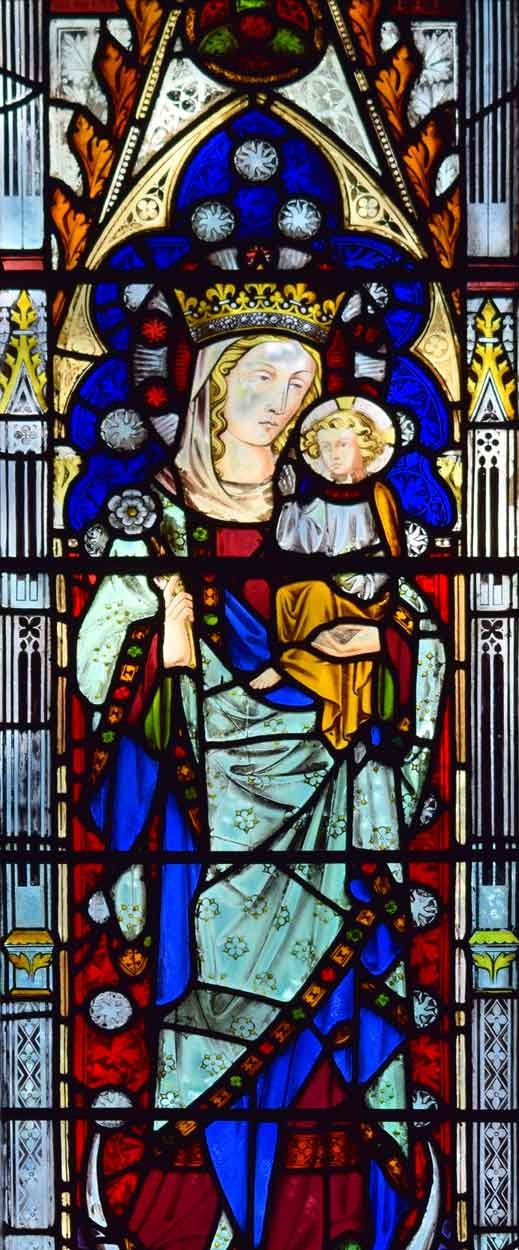
Detail of Altar window central panel, Madonna and child

Large window behind the altar

The (liturgical) east window with Pugin glass made by Hardman, is made up of five panels featuring, The Annunciation, Nativity, Assumption and Coronation, with the centre panel as the Guiding Star of Sailors. Together with the Rood screen and the High Altar these are three uniting elements. 

Originally Wardell's intention was that John Hardman would design the window. Wardell suggested to Hardman four ideas, but only three were legible: the Joyful Mysteries, Rosa Mystica and Stella Matutina. In a letter of 13 April 1850, Wardell advised of an unnamed benefactor giving £150 and that Fr North himself, would give £20. 

But Wardell, who designed the window frames and tracery, left Our Ladye Star of the Sea before the the east window was glazed. Pugin took over the design. “What a vile window is that Greenwich East," he wrote (15 October 1851). “There is hardly a space as large as the palm of your hand to get any design in all that is effective. …How the window has been put together puzzles me. It is a wretched job.”  The invoice of 8 September 1851 was for £190 “including fixing”.

The upper panel represents the vision of God in Isaiah 6 and reinforces the sacramental mystery.

The central light of the east window shows the Madonna and Child with details that are specific to the church. For example, the Madonna stands on a crescent moon with two blue bands below it. The upper one is studded by stars, the lower one is patterned with waves. 

Beneath these, four mariners send up their urgent prayers from a sailing ship which is being buffeted by a storm. The light showing the Nativity, just left of centre, is a traditional scene with Joseph by his wife's side, the ox and the ass by the manger, and a little lantern lighting the scene.  

The canopies, gables and borders are all very finely detailed, as is the tracery. Two more angels hold emblems above and the wheel above depicts fluid, floating angels. 

Blessed sacrament window  

The stained-glass window with eucharistic themes, above the tabernacle, is by Hardman, the panels are:  

  • Christ as the Good Shepherd: Jesus holds a shepherd's crook, and cradles a lamb. 
  • The sacrifice of Melchizedek: to the left of the Good Shepherd. Melchizedek offers bread and wine to Abraham illustrating the sacramental tradition.    
  • The Sacrifice of Isaac: to the right of the Good Shepherd. Abraham's dutiful willingness to sacrifice Isaac. The tracery here is also very beautiful, filled with a white and yellow silver stain floral grisaille, shades of the same colour, often grey and red-rimmed roundels containing yellow flowers and blue, red and green rosettes.

There is a side window of an angel shown with a scroll, bearing a text giving thanks for Holy Communion (Panem ... Alleluia). Since Pugin designed the interior of this chapel, the windows are his design too. 

In a letter to Hardman of 9 September 1851, North expresses gratitude that the side windows of the Blessed Sacrament will arrive soon, saying, “when it rains on that side Pugin’s beautiful little altar gets spattered with wet” and on 1 October 1851, talking again of the absence of glass, he states, “we had a fearful storm here last night and the windows at present are only stopped with calico”. 

Bread of Heaven side window in Blessed Sacrament chapel
The woman clothed with the sun, and St John receiving the Revelation in the Sacred Heart chapel

Sacred Heart chapel

There is a window just to the left of the chapel which has been written about in previous restorations the window of the Holy family dedicated to John Ford (died 1947) by John Trinick.

In the chapel there is a window commemorated to Canon John Sheen in 1937, in an Arts and Crafts style. It depicts St John the evangelist receiving the Revelation. It's a scene where there is also the woman clothed with the sun, signifying glory She gives birth to a child who is taken up to God's throne.

It is best understood as a message of hope and encouragement to Christians facing persecution, rather than a literal prediction of future events. The Book of Revelation uses vivid imagery and symbolism to depict God's judgement on evil and the triumph of good.

Aisle windows

There is a further window with stained glass roundels of two prominent past Catholic figures of St Thomas Becket and St Jerome, as seen on the opening image to this page. If anyone knows when this window was installed and by whom, do get in touch.

Looking in from the outside to the Virgin and her mother St Anne

Read about our restoration project